
Dual AV Pacing Patterns: Understanding Atrial–Ventricular Pacing
Dec 05, 2025Dual-chamber pacemakers in DDD mode are capable of pacing both the atrium and the ventricle. When a patient displays a dual AV pacing pattern—atrial pacing followed by ventricular pacing (AP–VP)—it reflects a deliberate timing and sensing strategy designed to maintain synchrony in patients whose intrinsic conduction system cannot reliably transmit atrial impulses to the ventricles.
This post breaks down how dual-chamber pacing produces the AP–VP pattern, the timing intervals that govern each beat, and the anatomic basis that determines when a pacemaker must activate both chambers.
Related Posts:
- Atrial Sensed Ventricular Paced (ASVP) Pacemaker Pattern
- Atrial Paced Ventricular Sensed (APVS) Pacemaker Pattern
1. What Is a Dual AV Pacing Pattern?
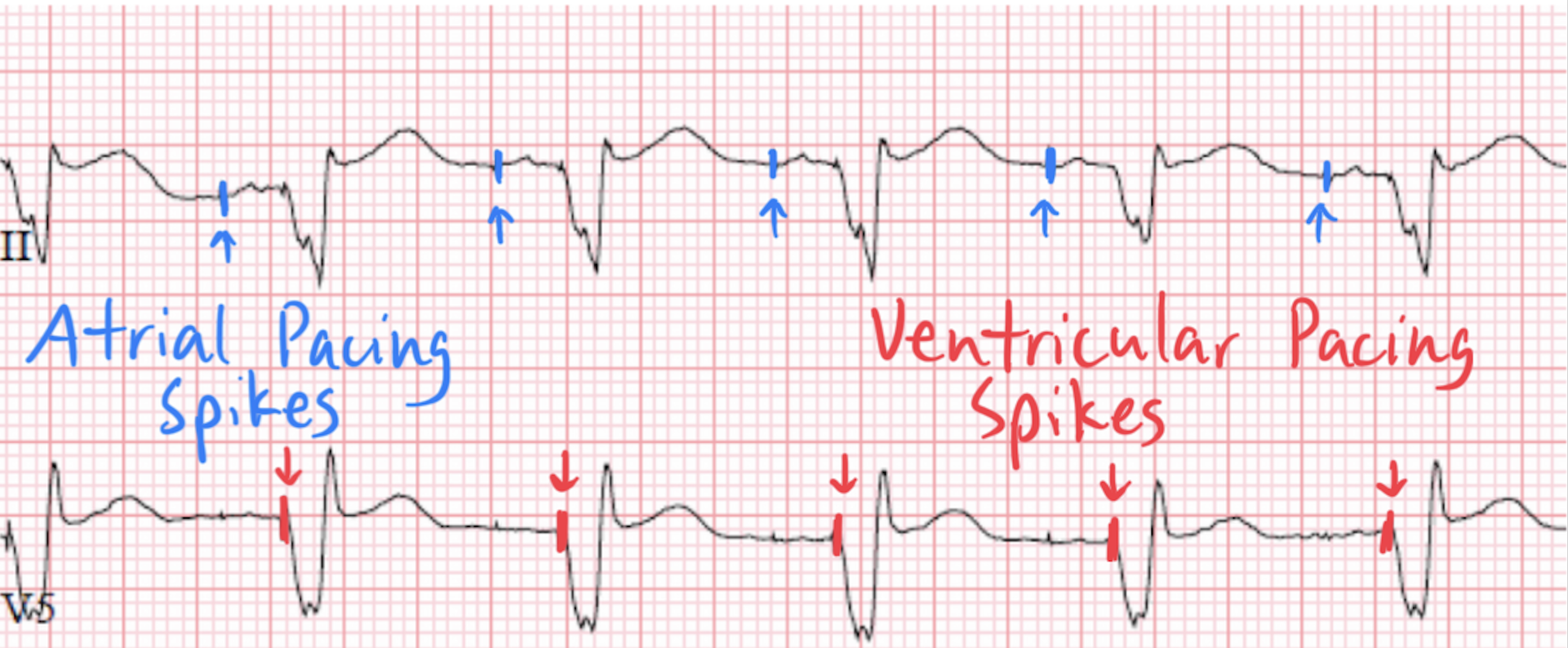
Dual AV pacing refers to the sequence:
Atrial Pace → AV Delay → Ventricular Pace
(AP–VP)
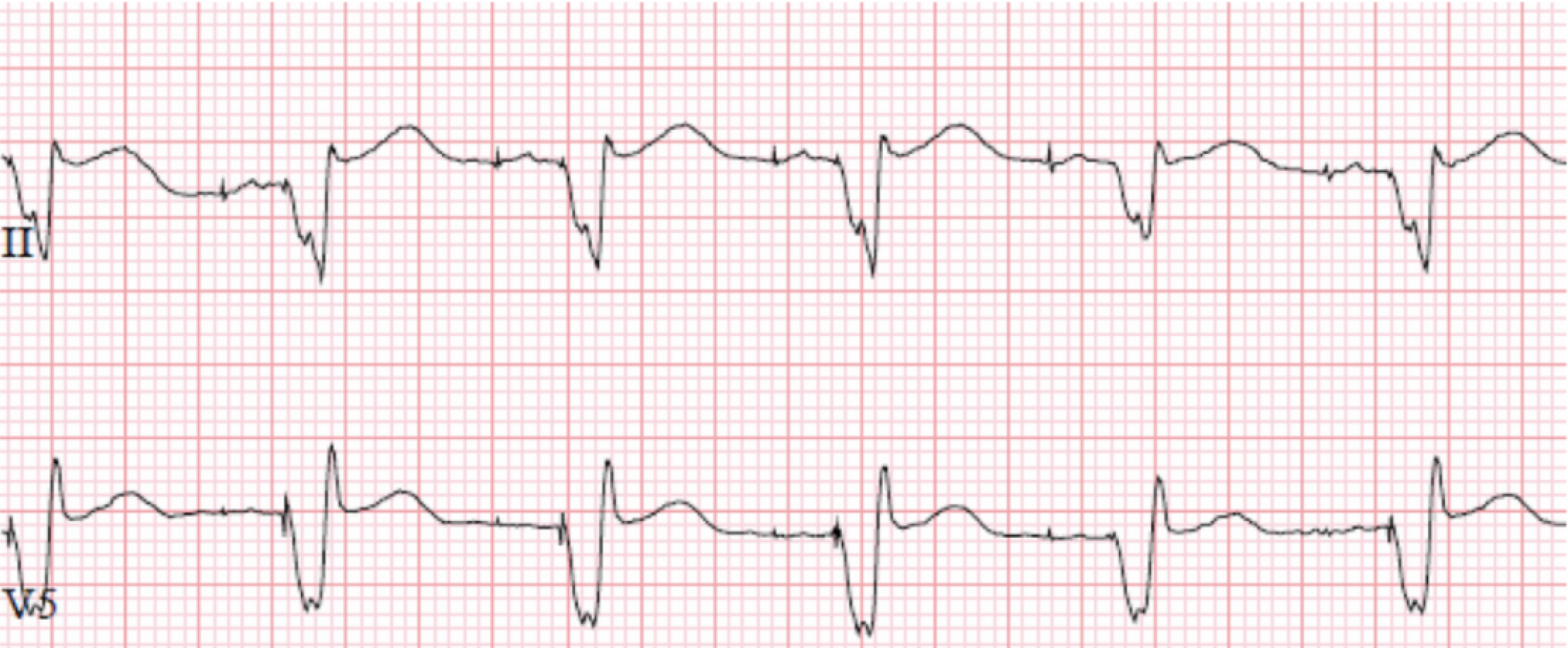
This pattern appears on ECG as:
-
Atrial pacing spike
-
Paced P wave
-
A programmed PR-like interval (AV delay)
-
Ventricular pacing spike
-
Wide, paced QRS complex (often LBBB morphology in RV apical leads)
A dual AV pacing pattern occurs when:
-
The sinus node is unreliable → atrial pacing is needed, and
-
The AV node or His–Purkinje system is unreliable → ventricular pacing is needed.
Thus, AP–VP represents maximal pacemaker support for cardiac timing.
2. When Does the Pacemaker Decide to Pace Both Chambers?
In DDD mode, every cardiac cycle is managed by tiered rules:
Step 1 — Lower Rate Interval (LRI) for Atrial Timing
If no intrinsic P wave is sensed before the LRI expires, the pacemaker generates an atrial pacing spike.
This replaces absent sinus node activity.
Step 2 — AV Delay Timer Starts
After an atrial pacing event (AP) or atrial sensing event (AS), the device begins counting the AV delay (e.g., 150–200 ms).
The AV delay serves as the device’s artificial “PR interval.”
Step 3 — Ventricular Sensing Window Opens
During the AV delay, the pacemaker monitors the ventricle:
-
If a native QRS is sensed → VP is inhibited
-
If no QRS is sensed → VP is delivered as soon as the AV delay expires
When the AV node fails to conduct the paced atrial impulse, the system defaults to ventricular pacing, creating the dual AV pacing pattern (AP–VP).
Enjoy this style of lecture and looking to learn more? Click below to learn more about how you can join my complete ECG course.
ECG With Reid Academy
Accredited by the AMA, AAPA, ANCC, ACPE & more.