
Atrial-Sensed, Ventricular-Paced Rhythms
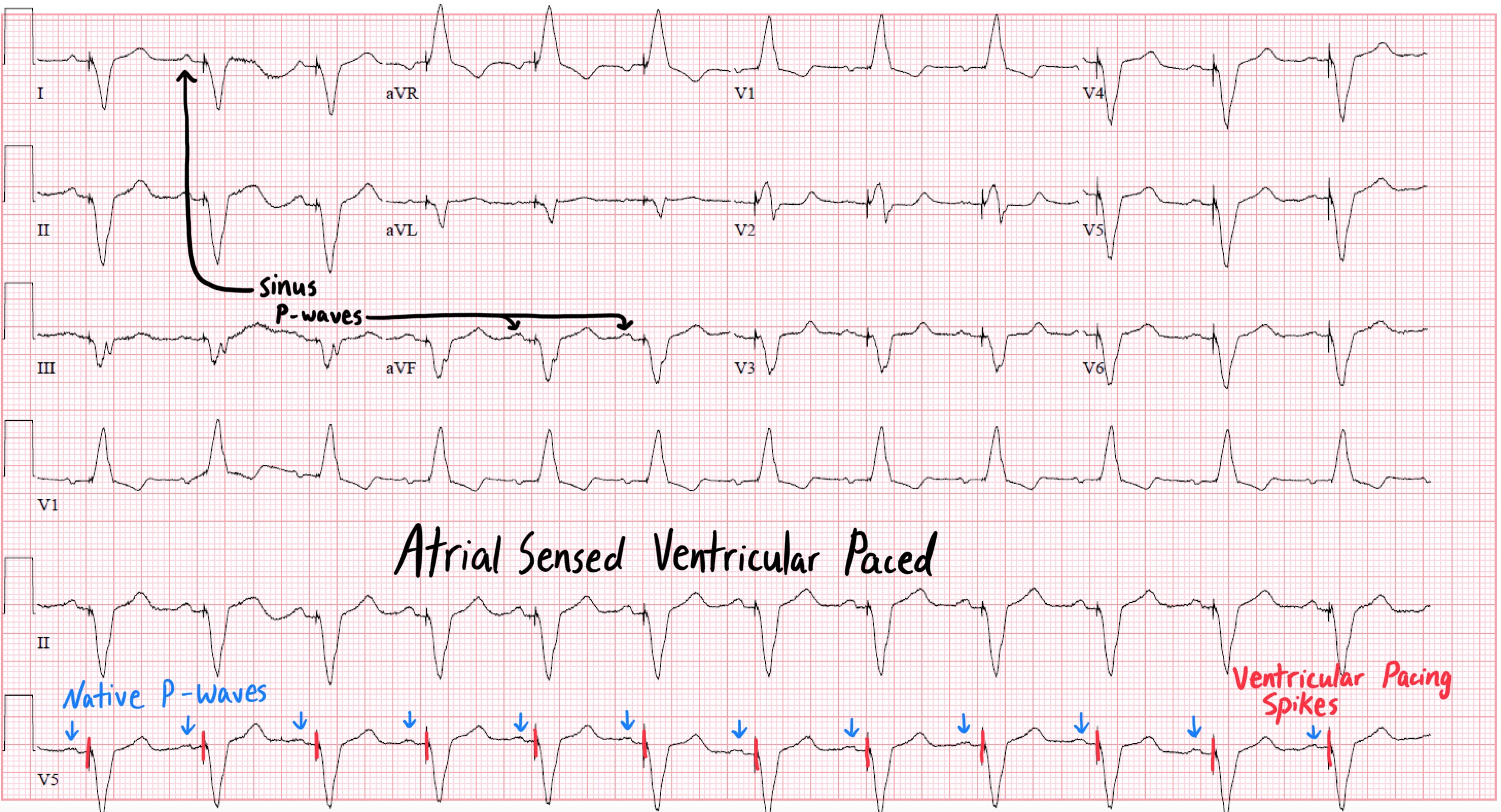
Dec 03, 2025Atrial-sensed ventricular-paced (AS-VP) rhythms are among the most physiologically elegant pacing patterns. Rather than imposing an artificial rhythm, the device works with the patient’s native atrial activity, waiting for intrinsic atrial depolarization and then delivering a precisely timed ventricular stimulus. This mode preserves AV synchrony while ensuring consistent ventricular support—an approach deeply rooted in both cardiac anatomy and the physiology of conduction.
Let’s break down what the ECG shows, how the pacemaker times its responses, and why the anatomic design of the conduction system necessitates this behavior.
Related Posts:
1. What Is an AS-VP Rhythm?
In an atrial-sensed ventricular-paced rhythm (commonly DDD or VDD mode):
-
The sinus node fires normally → atrial depolarization occurs.
-
The pacemaker senses that atrial activity through the atrial lead (or in VDD, through a floating atrial sensing dipole).
-
After sensing the P wave, the device waits a predetermined AV delay.
-
If no intrinsic ventricular depolarization occurs during that interval → the pacemaker delivers a ventricular paced beat.
The ECG therefore shows:
-
Native P waves
-
Followed consistently by paced QRS complexes
-
In a fixed P-to-QRS timing relationship determined by the programmed AV delay
This preserves the normal atrial contribution to ventricular filling—a key hemodynamic benefit.
2. How the Device Knows When to Pace: The Timing Cycle
A. Atrial Sensing
The atrial lead detects an atrial depolarization when the sinus node fires. The device marks this internally as an AS event.
What happens next depends entirely on the conduction system.
B. The AV Delay Timer
Once an atrial event is sensed, the device starts an AV delay—the pacing equivalent of the intrinsic PR interval.
This AV delay may be:
-
Short (e.g., 120–150 ms) in patients with heart block
-
Longer (e.g., 160–200+ ms) in patients with intact but slow AV conduction
-
Adjusted with features like rate-adaptive AV delay
If a native ventricular depolarization occurs before the timer ends → a VS (ventricular sensed) event is recorded and no pacing stimulus is delivered.
If none occurs → the device emits a VP (ventricular paced) output.
Enjoy this style of lecture and looking to learn more? Click below to learn more about how you can join my complete ECG course.
ECG With Reid Academy
Accredited by the AMA, AAPA, ANCC, ACPE & more.