
The Pseudo-r’ Wave in AVNRT
Nov 28, 2025One of the hallmark ECG clues for typical AV nodal reentrant tachycardia (AVNRT) is the appearance of a small, sharp pseudo-r’ deflection in lead V1. Although it looks like a tiny terminal R’ wave, it is not part of ventricular depolarization. Instead, it represents retrograde atrial activation occurring immediately after ventricular depolarization.
Unfamiliar with AVNRT? Read more & watch the AVNRT blog post here.
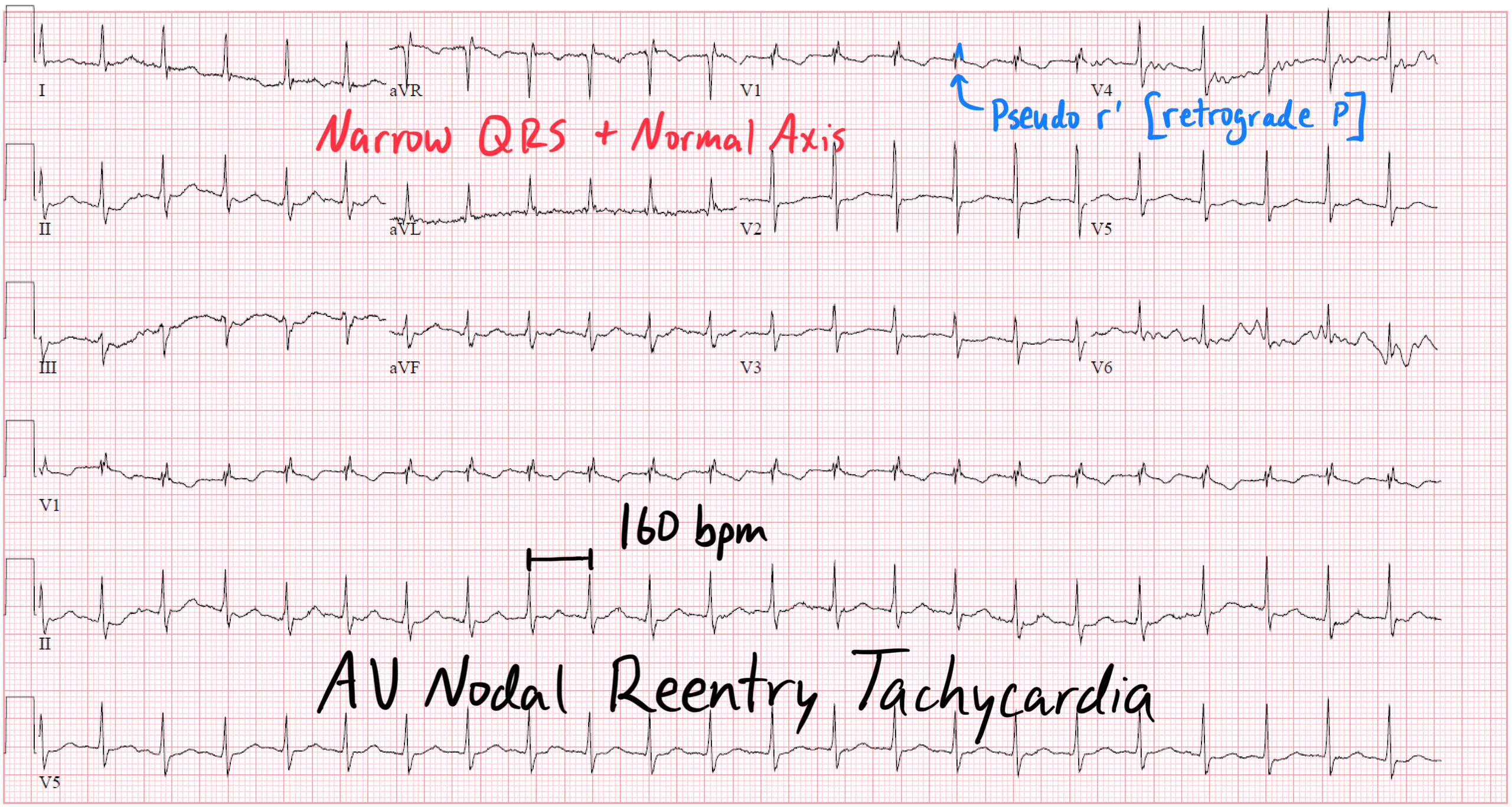
1. The Anatomical Basis: Dual Pathways of the AV Node
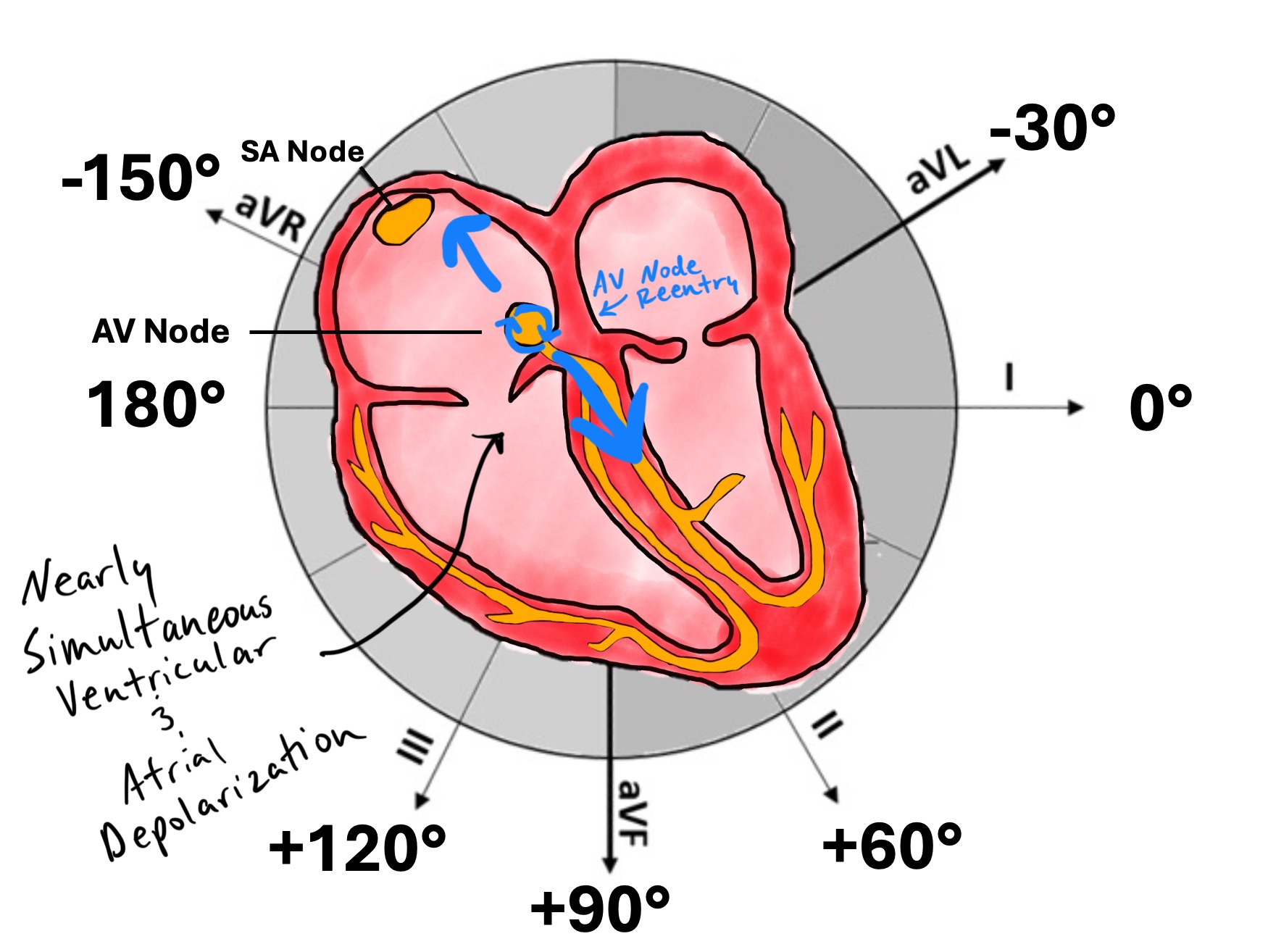
In typical AVNRT, the reentrant loop forms within the AV node and perinodal tissue, utilizing two distinct conduction pathways:
-
Slow pathway: Posterior–inferior, located near the coronary sinus ostium
-
Fast pathway: Anterior–superior, located near the compact node
During sinus rhythm:
-
Atrial impulses preferentially travel down the fast pathway.
During AVNRT:
-
The impulse travels anterograde through the slow pathway (slow conduction)
-
Then retrograde through the fast pathway (rapid conduction back to the atria)
This produces a near-simultaneous activation of the ventricles and atria.
2. Why the Retrograde P Wave Gets Hidden
Because retrograde conduction occurs rapidly through the fast pathway, the atria depolarize:
**• Very shortly after the ventricles depolarize
• With the atria activated from the septum upward**
This timing means that the retrograde P wave falls inside or immediately after the QRS complex, where it becomes visually obscured.
But depending on the lead orientation, part of that hidden P wave becomes visible — and that’s where the pseudo-r’ comes from.
Enjoy this style of lecture and looking to learn more? Click below to learn more about how you can join my complete ECG course.
ECG With Reid Academy
Accredited by the AMA, AAPA, ANCC, ACPE & more.